
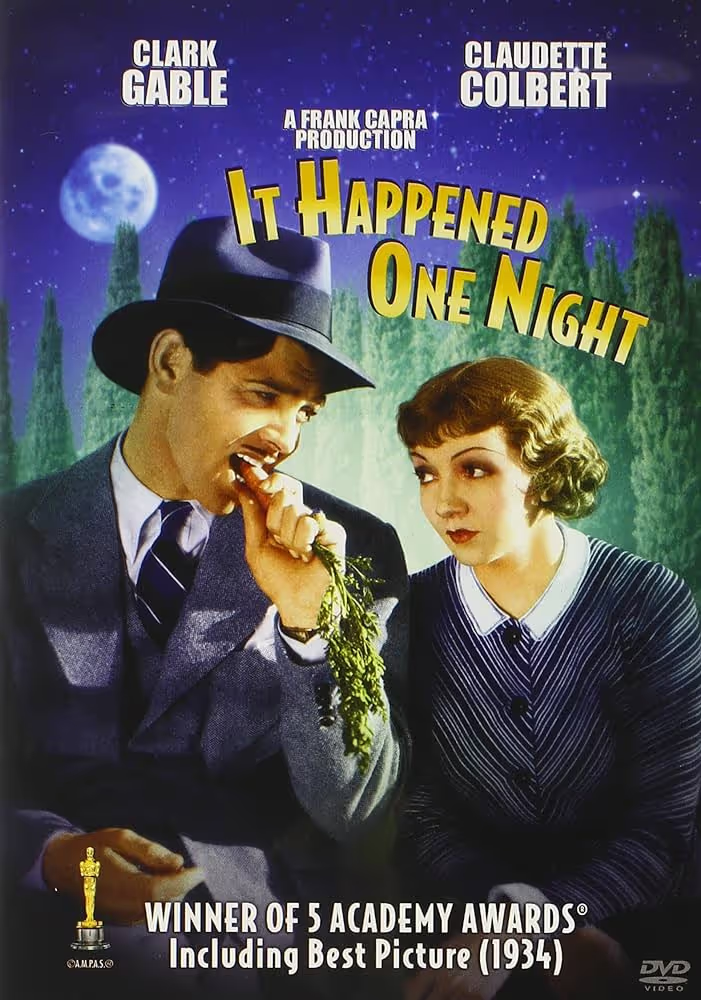
It Happened One Night is a 1934 American romantic comedy film directed by Frank Capra, starring Claudette Colbert and Clark Gable. The film is based on the short story "Night Bus" by Samuel Hopkins Adams and is widely hailed as one of the greatest films ever made.
It Happened One Night is considered a classic in the romantic comedy genre and has inspired countless films. It remains widely viewed and highly acclaimed by mainstream audiences
Plot
The film tells the story of a rich heiress, Ellie Andrews, who marries a man disapproved of by her father. After a quarrel, she escapes her father's yacht and attempts to travel to New York to reunite with her husband.
On her journey, she meets an out-of-work reporter named Peter Warne, who initially sees an opportunity for a good story. However, as they travel together, they develop an appreciation and understanding of each other, which eventually turns into love.
The plot is characterized by the development of a romantic relationship between Ellie and Peter as they navigate various challenges and adventures during their travels.
Trailer
Cast
- Clark Gable as Peter Warne
- Claudette Colbert as Ellie Andrews
- Walter Connolly as Andrews, Ellie's father
- Roscoe Karns as Shapeley
- Jameson Thomas as King Westley
- Alan Hale as Danker
- Arthur Hoyt as Zeke
- Blanche Friderici as Zeke's wife
- Charles C. Wilson as Joe Gordon
- Ernie Adams as the bus driver
- Ward Bond as the bus driver
Director: Frank Capra
Writer: Samuel Hopkins Adams, Robert Riskin
Box Office Gross: $11,477
Distributor: RCA/Columbia, Columbia Pictures, Columbia TriStar Home Video
Release Date (Theaters): Feb 22, 1934
Release Date (Streaming): Apr 16, 2012
Themes & Reception
The film's themes include love, class differences, and the pursuit of happiness.
The film was widely acclaimed upon its release and has since become a classic in the romantic comedy genre. It was one of the last romantic comedies created before the strict enforcement of the Motion Picture Production Code in July 1934. The film won all five major Academy Awards: Best Picture, Best Director, Best Actor, Best Actress, and Best Adapted Screenplay, making it one of only three films to achieve this feat.
The film's success was largely due to its strong acting, direction, and dialogue, as well as its engaging portrayal of the evolving relationship between the main characters.
Despite occasional thinness and illogical elements in the plot, the film's action carries it along fluently and amusingly, making it a timeless classic that continues to be enjoyed by audiences today.
Challenges
During the production of It Happened One Night (1934), the filmmakers faced challenges related to the enforcement of the Motion Picture Production Code, also known as the Hays Code. The Hays Code, which aimed to regulate the content of motion pictures, was nearly four years old when the film was released in February 1934. The film is often referred to as "pre-Code," which can be confusing, as it was released just before an amendment was added to the Code.
The romantic comedy nature of It Happened One Night, featuring its male and female leads spending a great deal of time alone together, unmarried and sharing the same room, presented a challenge in terms of adhering to the Code's regulations while maintaining the film's romantic and comedic elements.
Director Frank Capra had to navigate the delicate balance of making the film sexy without making it obscene or excessively provocative, ensuring the lasting success of the movie.
Visual Styles & Techniques
The visual style and techniques in It Happened One Night are notable for their timeless and elegant presentation. The film's costume design, overseen by Robert Kalloch, is particularly praised for its exceptional talent, skill, and experience. Kalloch's work in outfitting the characters, including Clark Gable and Claudette Colbert, is highlighted for its beauty and attention to detail, contributing to the film's enduring appeal.
Setting
The setting primarily takes place during a bus journey from Florida to New York. The film showcases various locations along the way, including bus stops, motels, and other roadside settings.
These settings serve as the backdrop for the evolving relationship between the main characters, Ellie Andrews and Peter Warne, as they embark on their journey together. The film's setting plays a significant role in shaping the narrative and the dynamics between the characters, contributing to the overall charm and appeal of the story.
Trivia
- The film was the first to win all five major Academy Awards: Best Picture, Best Director, Best Actor, Best Actress, and Best Adapted Screenplay. This feat was later duplicated by "One Flew Over the Cuckoo's Nest" (1975) and The Silence of the Lambs (1991).
- The film was made during the height of the Great Depression and was a huge success, becoming the highest-grossing film of 1934.
- Claudette Colbert initially did not want to star in the film and only agreed to do so after being offered double her salary and a two-week vacation in the middle of filming.
- Clark Gable was loaned out to Columbia Pictures by MGM to star in the film. He was initially unhappy about the role but eventually warmed up to it and gave a memorable performance.
- The famous scene where Gable's character shows Colbert's character how to hitchhike was filmed on location on a highway in California. The scene was shot quickly and without permits, with real drivers stopping to offer them rides.
- The film's success led to a surge in sales of men's undershirts, as Gable's character famously takes off his shirt to reveal that he is not wearing an undershirt.
- The film's director, Frank Capra, was initially hesitant to take on the project but eventually agreed after reading the script and seeing the potential for a great film.
Fun Fact
A fun fact about the film is that Clark Gable, who won the Academy Award for Best Actor for his role in the film, gave his Oscar to a child who admired it, telling him that it was winning the statue that had mattered, not owning it. The child later returned the Oscar to the Gable family after Clark's death. This gesture reflects Gable's humility and the value he placed on the achievement itself rather than the physical award.