
How to get a Hive Account
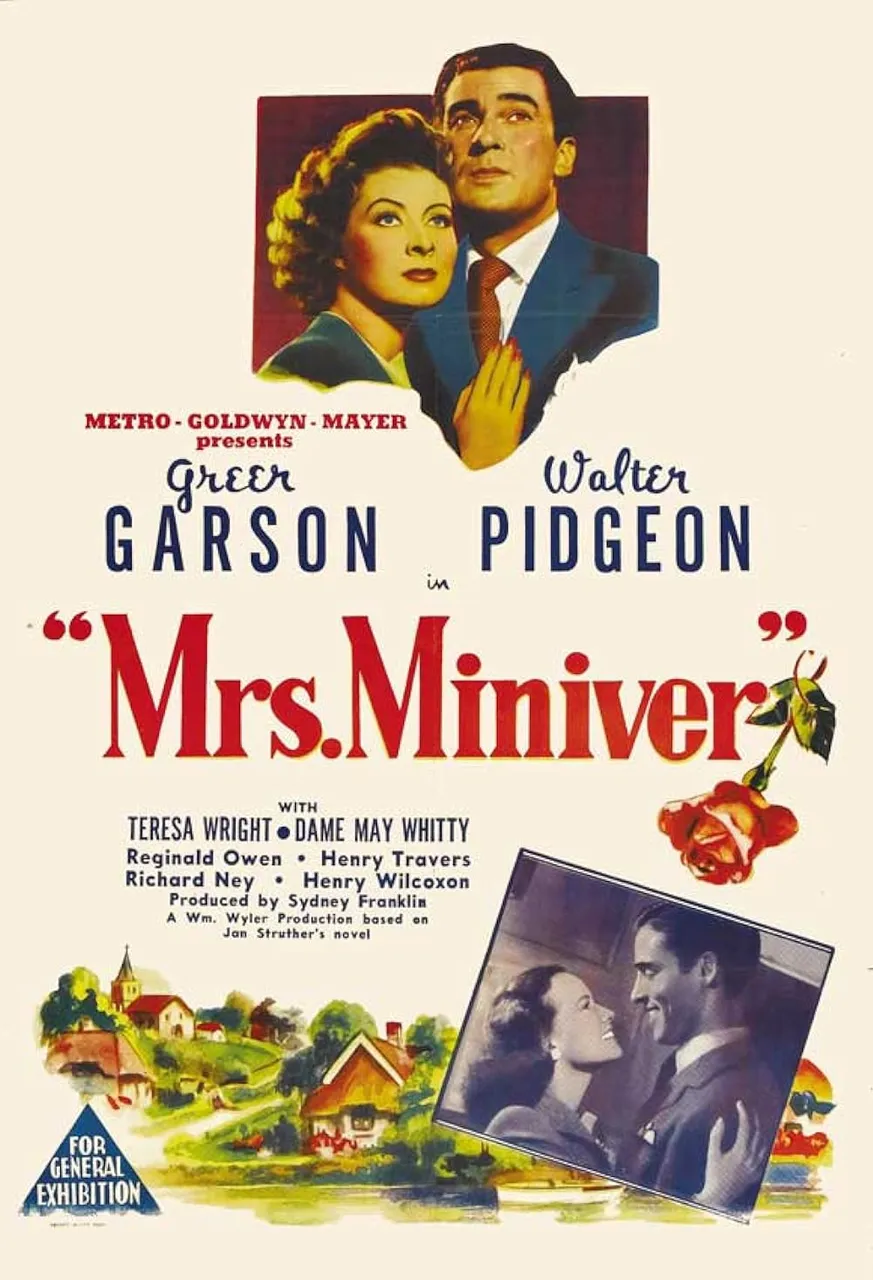
Mrs. Miniver is a 1942 American romantic war drama film directed by William Wyler and starring Greer Garson and Walter Pidgeon. Inspired by the 1940 novel Mrs. Miniver by Jan Struther, the film portrays the impact of World War II on the life of an unassuming British housewife in rural England.
It was produced and distributed by Metro-Goldwyn-Mayer and received 12 Academy Award nominations, winning six Oscars, including Best Picture, Best Director, Actress, and Supporting Actress. The film has been described as both sentimental propaganda and a moving drama about a middle-class English family learning to cope with war.
Plot
The story is told in a series of dramatic vignettes, and it follows the Miniver family as they learn to cope with the war. The film's key moments include Mrs. Miniver's oldest son returning from Oxford and meeting a young woman named Carol, Vin's departure to the RAF, Mrs. Miniver discovering a shot-down German flyer in her garden, and the Miniver family hiding out in their bomb shelter during an especially bad bombardment. The climax of the film occurs when enemy planes are spotted over the Channel, and Mrs. Miniver and Carol drive Vin to the airbase, then try to get home through the bombing.
Trailer
Full Cast
- Greer Garson as Kay Miniver
- Walter Pidgeon as Clem Miniver
- Teresa Wright as Carol Beldon
- Dame May Whitty as Lady Beldon
- Reginald Owen as Foley, Storekeeper
- Henry Travers as Mr. Ballard
- Richard Ney as Vin Miniver
- Henry Wilcoxon as Vicar Toby Miniver
Director: William Wyler
Writer: George Froeschel, James Hilton, Jan Struther, Claudine West, Arthur Wimperis
Distributor: Metro-Goldwyn-Mayer
Genre: Drama
Release Date (Theaters): Jun 4, 1942
Release Date (Streaming): Nov 21, 2016
Themes & Reception
The film Mrs. Miniver is known for its portrayal of the impact of World War II on an unassuming British housewife and her family in rural England. The film's themes include domestic fortitude, endurance, and middle-class reticence and perseverance in the face of tragedy and destruction. It has been described as a poignant story of the joys and sorrows, the humor and pathos of middle-class family life in wartime England.
It had a profound impact on British audiences, becoming a representation of national memory and self-image. It was also a critical and commercial success, topping the box office upon its initial release and spreading its message widely among the public.
The portrayal of danger lurking in domestic spheres and the clear-cut presentation of Good versus Evil are also notable aspects of the film. Additionally, the film has been recognized for its strong propaganda against complacency and isolationism during the war.
Challenges Faced
The production of the film Mrs. Miniver faced several challenges, including the need to balance the film's propaganda message with its artistic merit. Director William Wyler was concerned that Americans were being isolationists and wanted to create a film that would address this issue.
Additionally, the film was shot during World War II, which presented logistical challenges for the production team. The film was shot in both the United States and England to capture the essence of both countries during the war.
The film's realistic production design was praised for its meticulous attention to detail in accurately recreating the wartime era. Despite these challenges, the film was a critical and commercial success, receiving universal acclaim from both critics and audiences.
Visual Styles & techniques
The visual style and techniques of the film Mrs. Miniver have been praised for their sophistication and ability to express emotion and character solely through the image. Director William Wyler's distinctive visual style is evident in the film, showcasing meticulous attention to detail and a grounded approach to storytelling.
The film's production design, including the portrayal of domestic spaces and household objects, served as a form of wartime propaganda, effectively conveying the impact of the war on the home front.
Additionally, the film's visual storytelling captures the juxtaposition of the comfortable lifestyle of the Miniver family with the looming threat of war, effectively conveying the emotional and personal struggles faced by the characters.
Overall, the visual style and techniques of Mrs. Miniver contributes to its ability to depict the emotional and personal impact of World War II on the characters and their surroundings.
Setting
The film Mrs. Miniver is set in England during World War II, portraying the lives of an upper-class British family as they navigate the trials and tribulations of the war. Despite being set in England, the movie was entirely filmed on a set inside MGM Studios, showcasing the studio's ability to recreate the English setting with meticulous attention to detail.
The film's setting effectively captures the daily aerial bombardment from German planes and the impact of the war on the family's home, emphasizing the resilience and fortitude of the characters in the face of adversity. The visual style and techniques used in the film contribute to the portrayal of the wartime setting and the family's experiences during this tumultuous period.
Trivia
• Shortly after shooting was completed, Greer Garson, who played Mrs. Miniver, married Richard Ney, the actor who portrayed her son Vin in the film.
• The closing speech in the film, delivered by the vicar (Henry Wilcoxon), was written by Wilcoxon and director William Wyler the night before it was filmed. This speech was integral to the film's success and was distributed across America and Europe to boost wartime morale among soldiers and civilians.
Fun Fact
The film Mrs. Miniver won six Academy Awards, including Best Picture, Best Director for William Wyler, Best Actress for Greer Garson, and Best Supporting Actress for Teresa Wright. This achievement made it one of the most successful films of 1942 and solidified its place in cinematic history.
General:
Mrs. Miniver is a 1942 American romantic war drama film directed by William Wyler and starring Greer Garson and Walter Pidgeon. Inspired by the 1940 novel Mrs. Miniver by Jan Struther, the film portrays the impact of World War II on the life of an unassuming British housewife in rural England.
It was produced and distributed by Metro-Goldwyn-Mayer and received 12 Academy Award nominations, winning six Oscars, including Best Picture, Best Director, Actress, and Supporting Actress. The film has been described as both sentimental propaganda and a moving drama about a middle-class English family learning to cope with war.
Plot
The story is told in a series of dramatic vignettes, and it follows the Miniver family as they learn to cope with the war. The film's key moments include Mrs. Miniver's oldest son returning from Oxford and meeting a young woman named Carol, Vin's departure to the RAF, Mrs. Miniver discovering a shot-down German flyer in her garden, and the Miniver family hiding out in their bomb shelter during an especially bad bombardment. The climax of the film occurs when enemy planes are spotted over the Channel, and Mrs. Miniver and Carol drive Vin to the airbase, then try to get home through the bombing.
Trailer
Full Cast
- Greer Garson as Kay Miniver
- Walter Pidgeon as Clem Miniver
- Teresa Wright as Carol Beldon
- Dame May Whitty as Lady Beldon
- Reginald Owen as Foley, Storekeeper
- Henry Travers as Mr. Ballard
- Richard Ney as Vin Miniver
- Henry Wilcoxon as Vicar Toby Miniver
Director: William Wyler
Writer: George Froeschel, James Hilton, Jan Struther, Claudine West, Arthur Wimperis
Distributor: Metro-Goldwyn-Mayer
Genre: Drama
Release Date (Theaters): Jun 4, 1942
Release Date (Streaming): Nov 21, 2016
Themes & Reception
The film Mrs. Miniver is known for its portrayal of the impact of World War II on an unassuming British housewife and her family in rural England. The film's themes include domestic fortitude, endurance, and middle-class reticence and perseverance in the face of tragedy and destruction. It has been described as a poignant story of the joys and sorrows, the humor and pathos of middle-class family life in wartime England.
It had a profound impact on British audiences, becoming a representation of national memory and self-image. It was also a critical and commercial success, topping the box office upon its initial release and spreading its message widely among the public.
The portrayal of danger lurking in domestic spheres and the clear-cut presentation of Good versus Evil are also notable aspects of the film. Additionally, the film has been recognized for its strong propaganda against complacency and isolationism during the war.
Challenges Faced
The production of the film Mrs. Miniver faced several challenges, including the need to balance the film's propaganda message with its artistic merit. Director William Wyler was concerned that Americans were being isolationists and wanted to create a film that would address this issue.
Additionally, the film was shot during World War II, which presented logistical challenges for the production team. The film was shot in both the United States and England to capture the essence of both countries during the war.
The film's realistic production design was praised for its meticulous attention to detail in accurately recreating the wartime era. Despite these challenges, the film was a critical and commercial success, receiving universal acclaim from both critics and audiences.
Visual Styles & techniques
The visual style and techniques of the film Mrs. Miniver have been praised for their sophistication and ability to express emotion and character solely through the image. Director William Wyler's distinctive visual style is evident in the film, showcasing meticulous attention to detail and a grounded approach to storytelling.
The film's production design, including the portrayal of domestic spaces and household objects, served as a form of wartime propaganda, effectively conveying the impact of the war on the home front.
Additionally, the film's visual storytelling captures the juxtaposition of the comfortable lifestyle of the Miniver family with the looming threat of war, effectively conveying the emotional and personal struggles faced by the characters.
Overall, the visual style and techniques of Mrs. Miniver contributes to its ability to depict the emotional and personal impact of World War II on the characters and their surroundings.
Setting
The film Mrs. Miniver is set in England during World War II, portraying the lives of an upper-class British family as they navigate the trials and tribulations of the war. Despite being set in England, the movie was entirely filmed on a set inside MGM Studios, showcasing the studio's ability to recreate the English setting with meticulous attention to detail.
The film's setting effectively captures the daily aerial bombardment from German planes and the impact of the war on the family's home, emphasizing the resilience and fortitude of the characters in the face of adversity. The visual style and techniques used in the film contribute to the portrayal of the wartime setting and the family's experiences during this tumultuous period.
Trivia
• Shortly after shooting was completed, Greer Garson, who played Mrs. Miniver, married Richard Ney, the actor who portrayed her son Vin in the film.
• The closing speech in the film, delivered by the vicar (Henry Wilcoxon), was written by Wilcoxon and director William Wyler the night before it was filmed. This speech was integral to the film's success and was distributed across America and Europe to boost wartime morale among soldiers and civilians.
Fun Fact
The film Mrs. Miniver won six Academy Awards, including Best Picture, Best Director for William Wyler, Best Actress for Greer Garson, and Best Supporting Actress for Teresa Wright. This achievement made it one of the most successful films of 1942 and solidified its place in cinematic history.